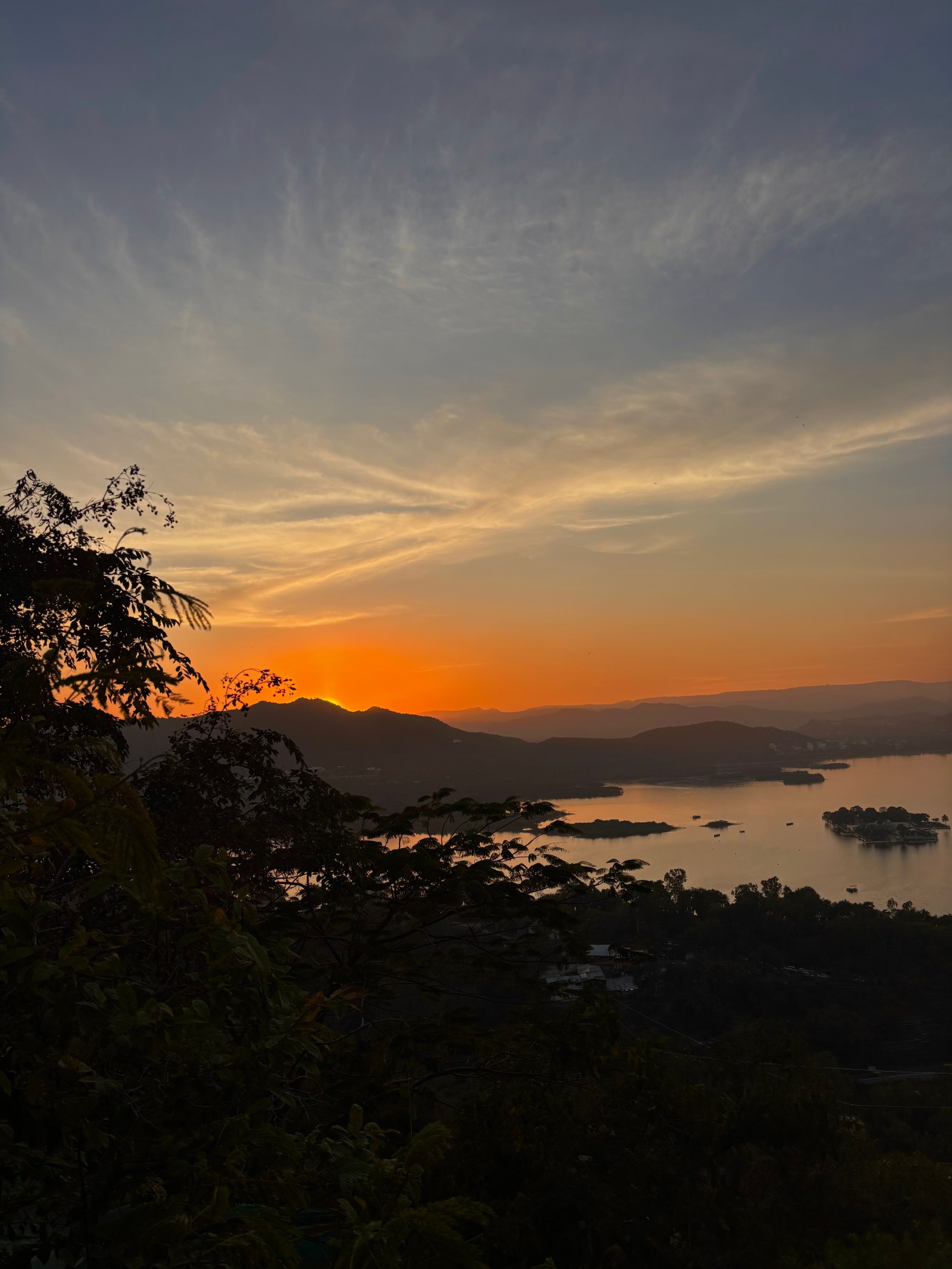
Upon touching down in Udaipur, Rajasthan, taking the pre-arranged cab to our hotel with our light-eyed, round-bellied guide, Mayur, I half-fell asleep in the backseat, opening my eyes occasionally to the coos of my parents and flashes of still, glass sheets across deep blue skies.
As we traveled this winter through India for three long weeks, beyond the confines of our tiny hometown, I felt a tinge of both familiarity and foreignness in each landscape we touched. I didn’t expect it to feel like home. I know that I’m far removed from the hundred-pillar temples and sole fishing markets of sparsely populated towns. Still, I realized that the rich history and experiences passed down through generations must have, at some point, made their way to me.
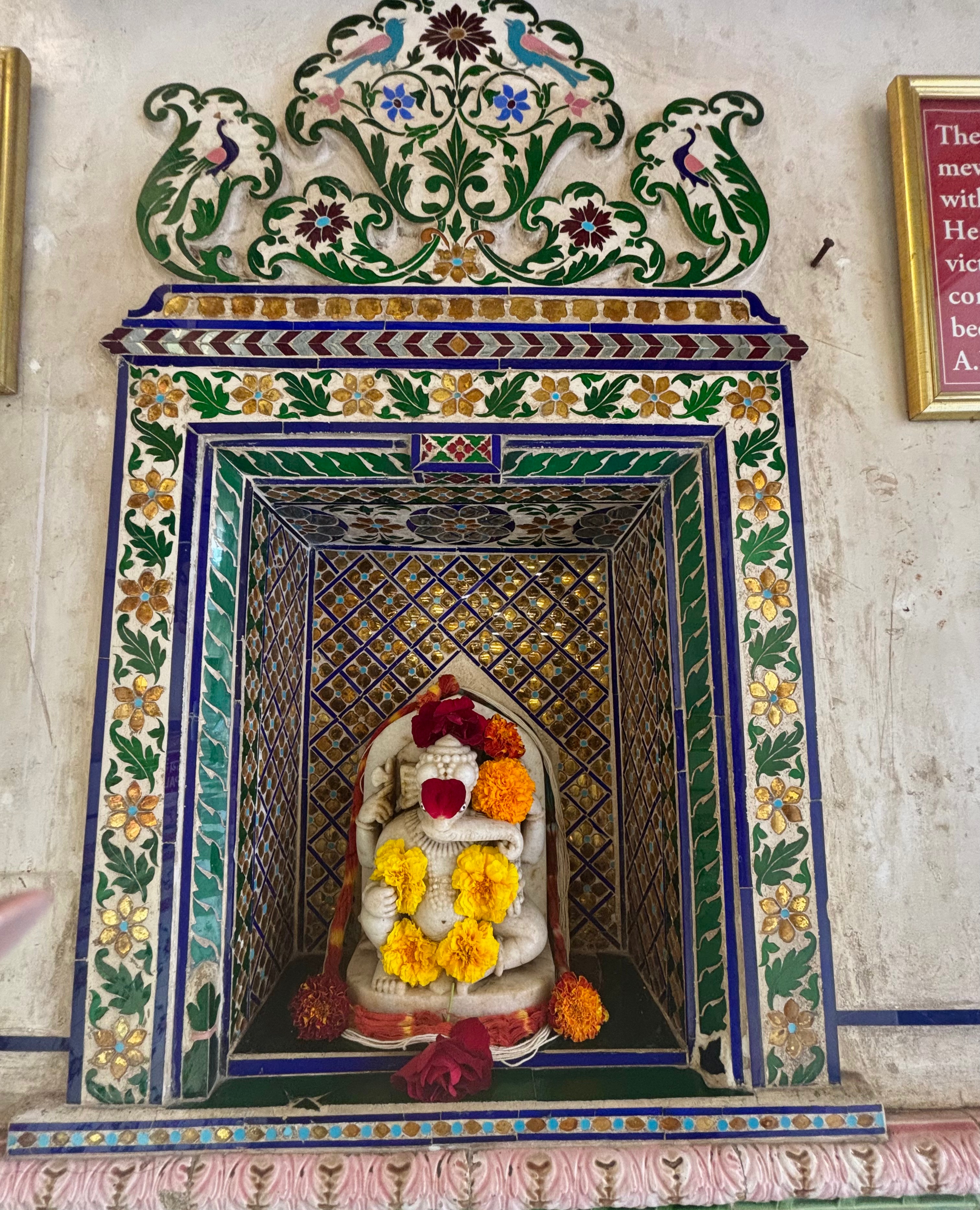
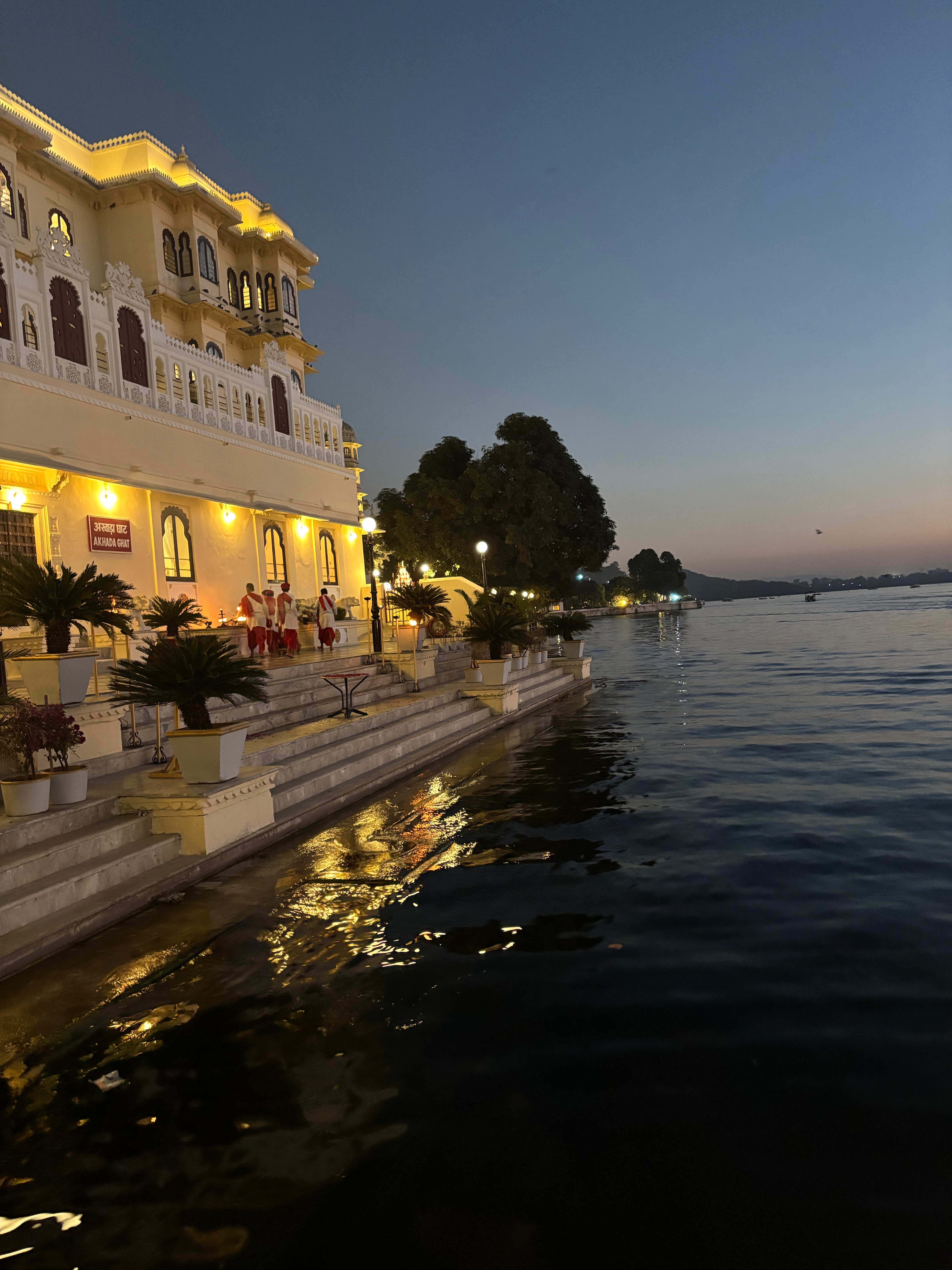
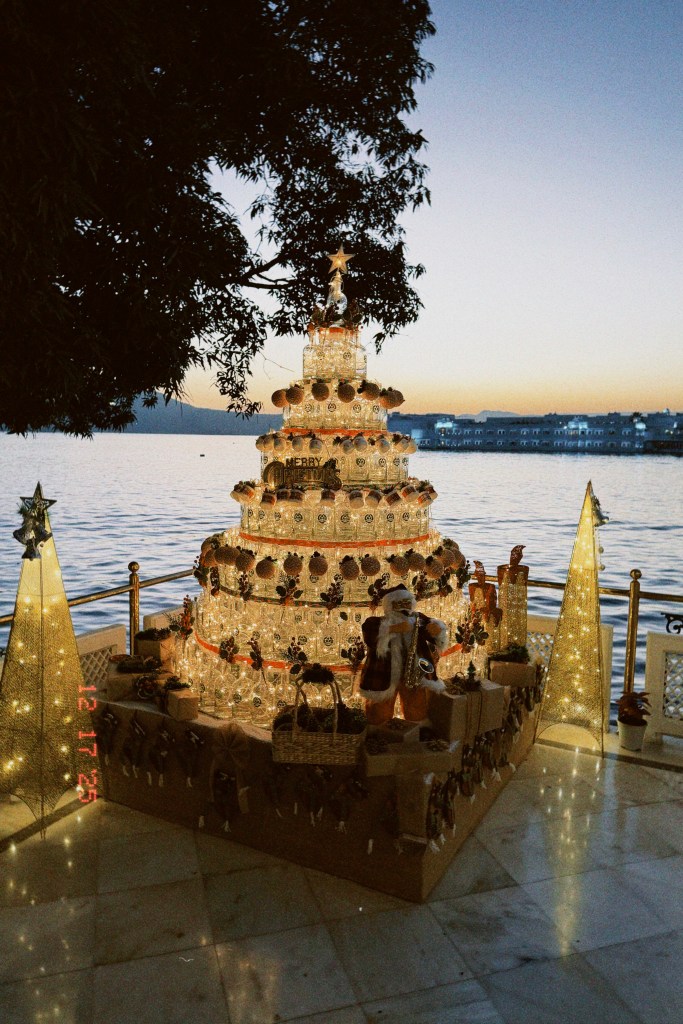
Ganga Aarti is a devotional sunset ritual of gratitude and worship toward Ganga, goddess of the holiest river in India. I Googled this after witnessing the aarti in Udaipur, unable to move my gaze from the smoking flame over the vast Lake Pichola. I’ve always been entranced by the combination of fire and water, seemingly opposing forces that live in unity, peacefully. Light and dark, the lamps and sunset across the opaque water. It was the first of many nights during which I felt heavy-eyed and at peace, taken by the smoke and holiness in the air.
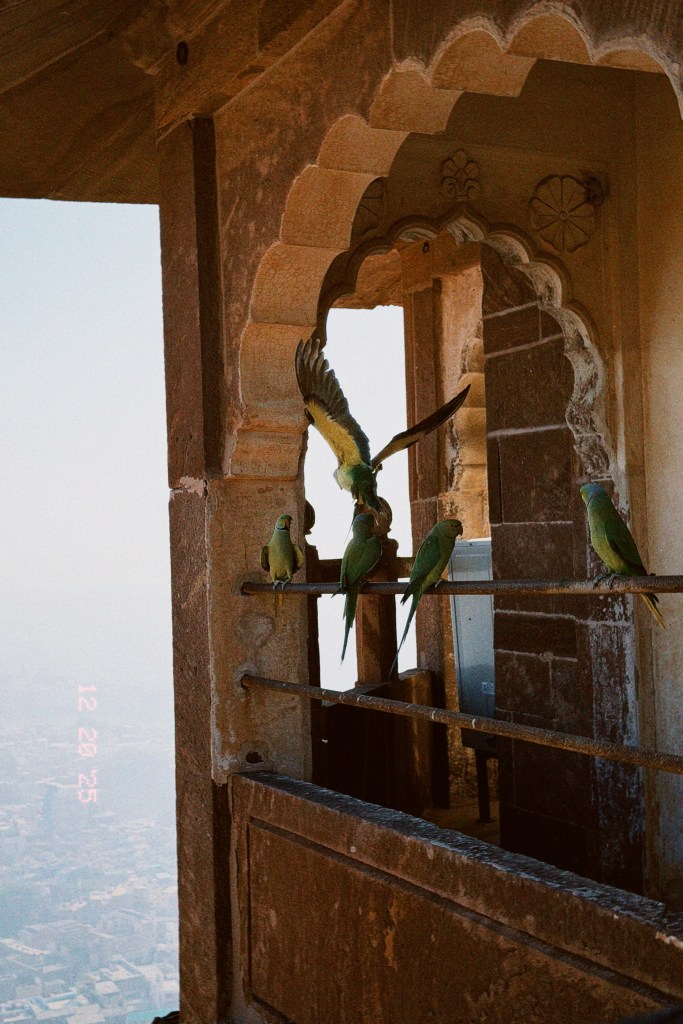
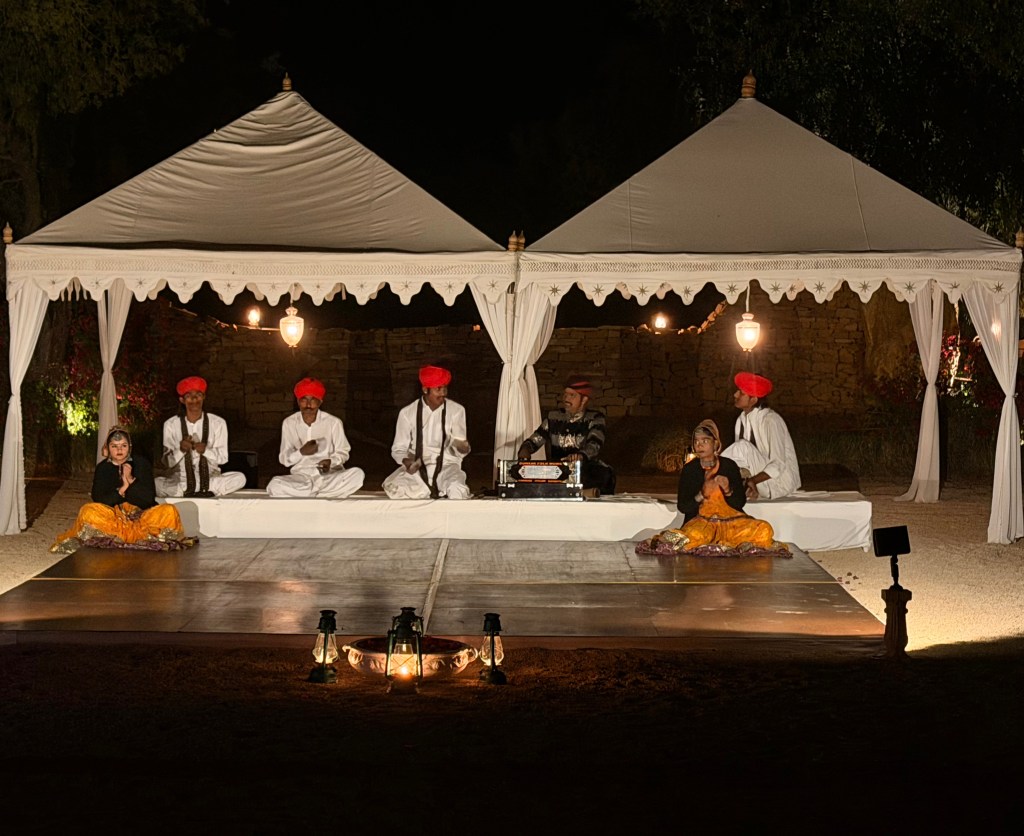
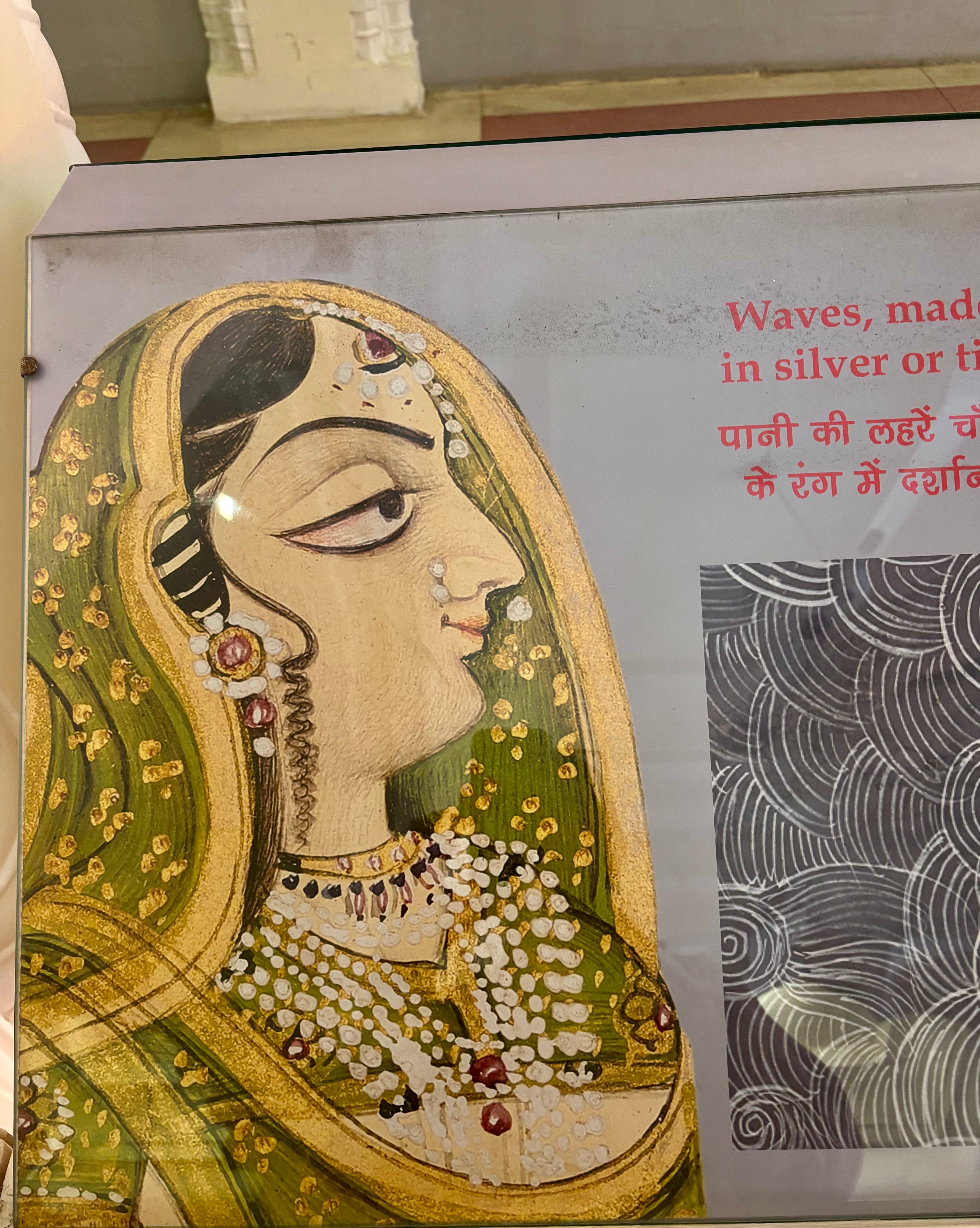
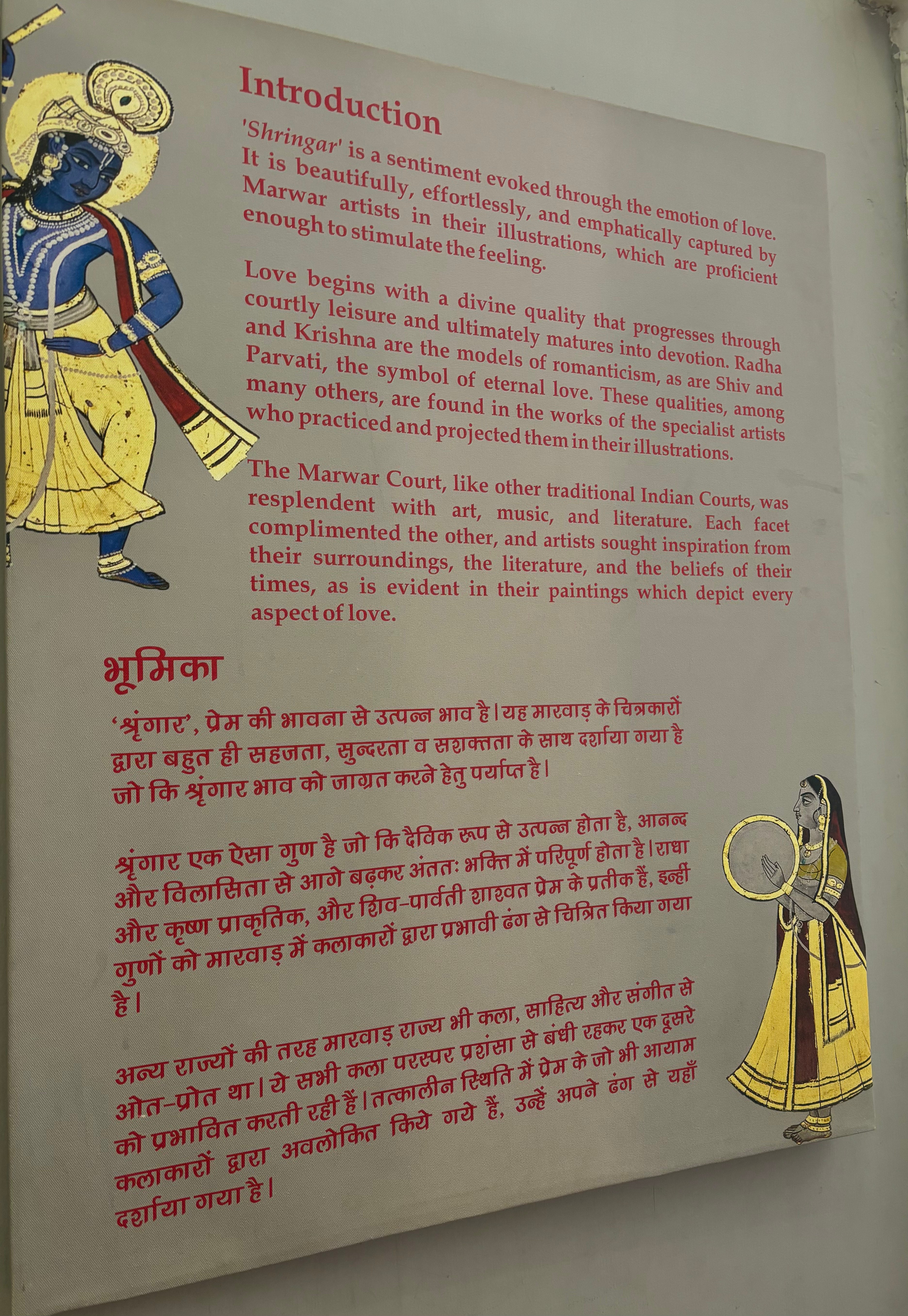
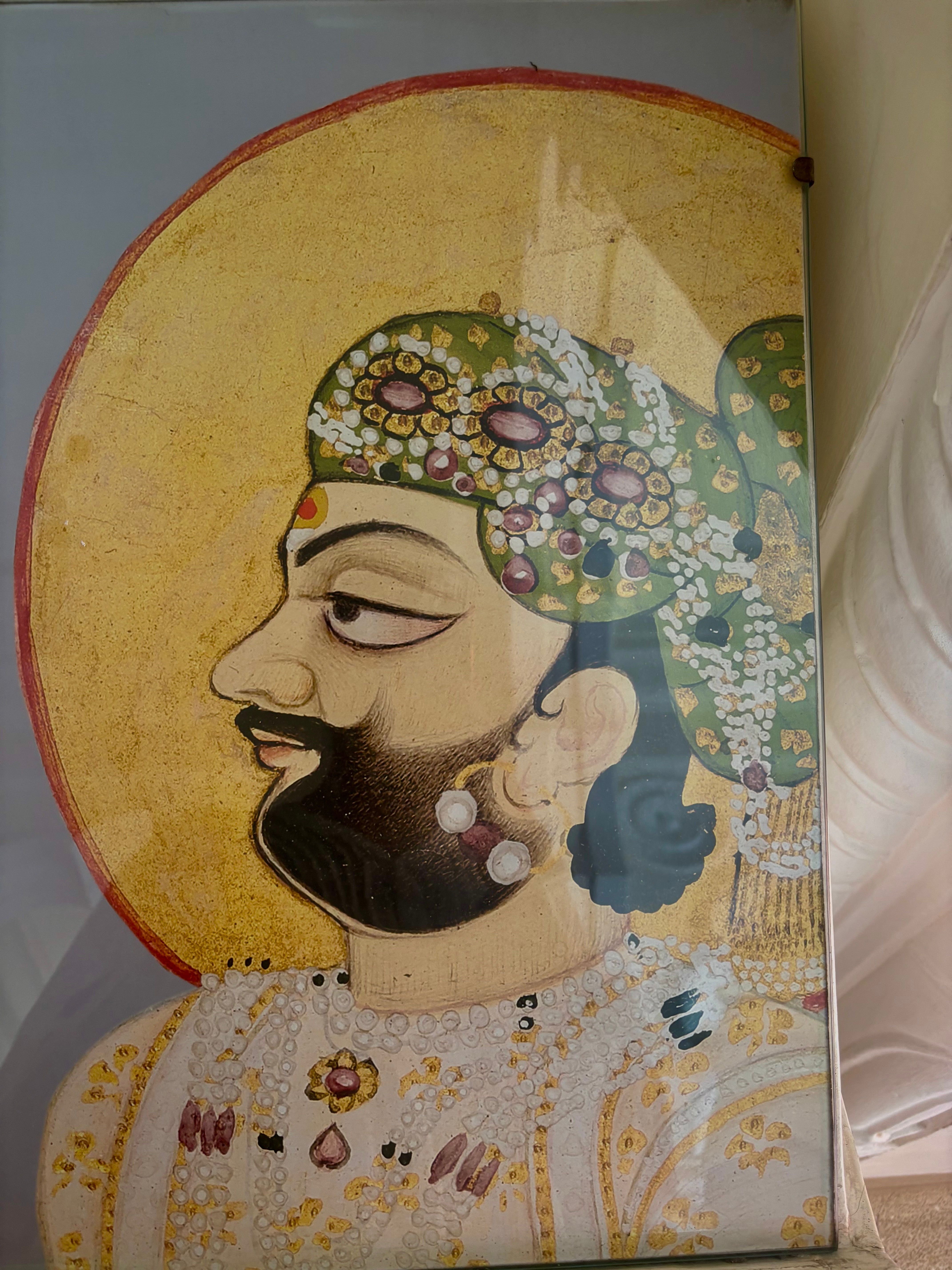
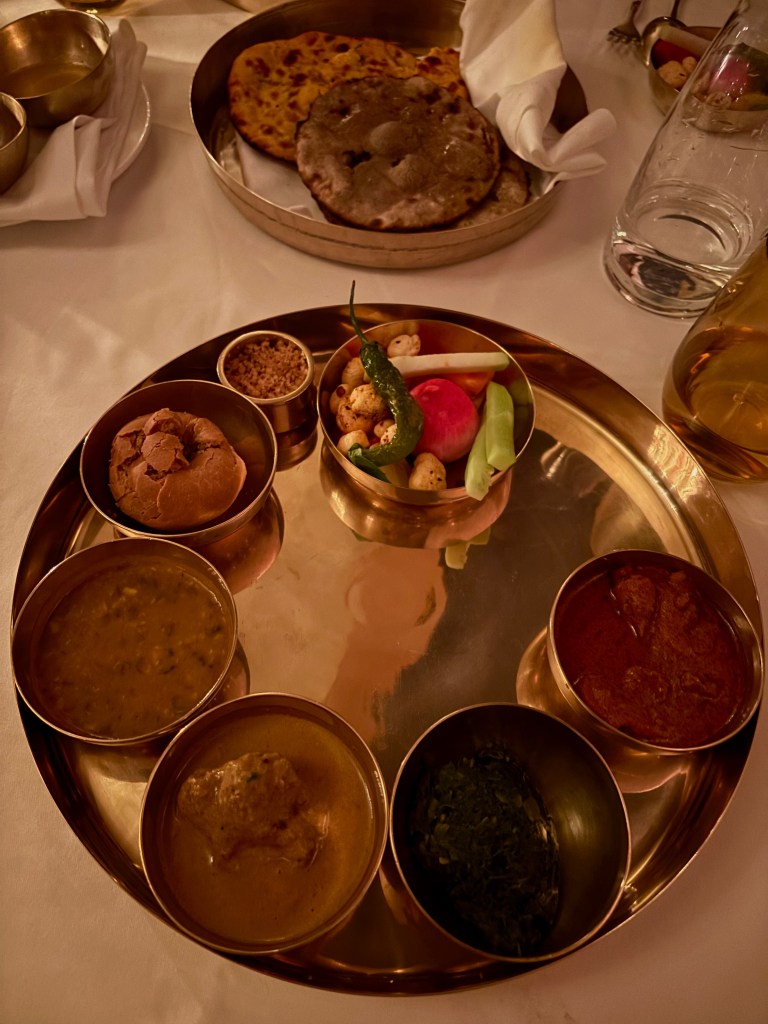
Rajasthan is a myriad of colors and textures and flavors. You can feel this in the lived-in fort of Jaisalmer and taste it in the creamy Gatte ki Subzi of small-town dhabas. Its scenes are akin to the miniature paintings that record its story, plated in gold and engraved with rich hues of minerals and stone. Precise attention is paid to detail. After all, to impart an image on a canvas as tiny as a grain of rice requires laser focus. So too, however, does the representation of concepts as large as love and devotion. Ironically, that parallels my experience over the three-week journey — harnessing appreciation for the little things that inform the big things: where I come from and how that determines who I am today.
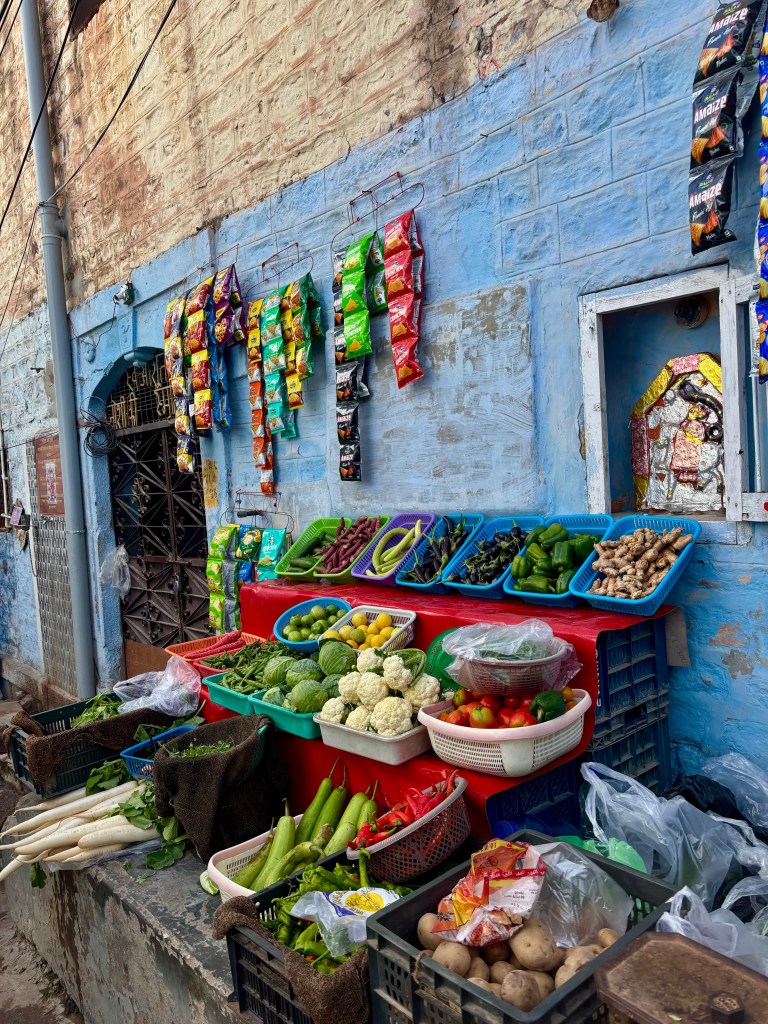
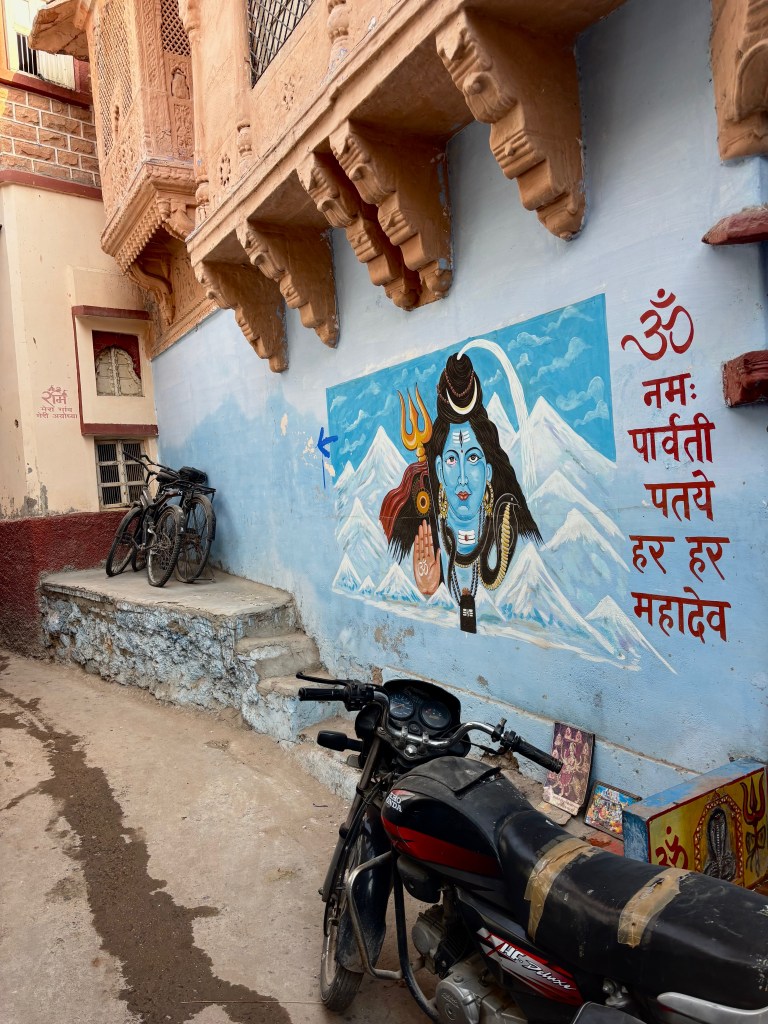
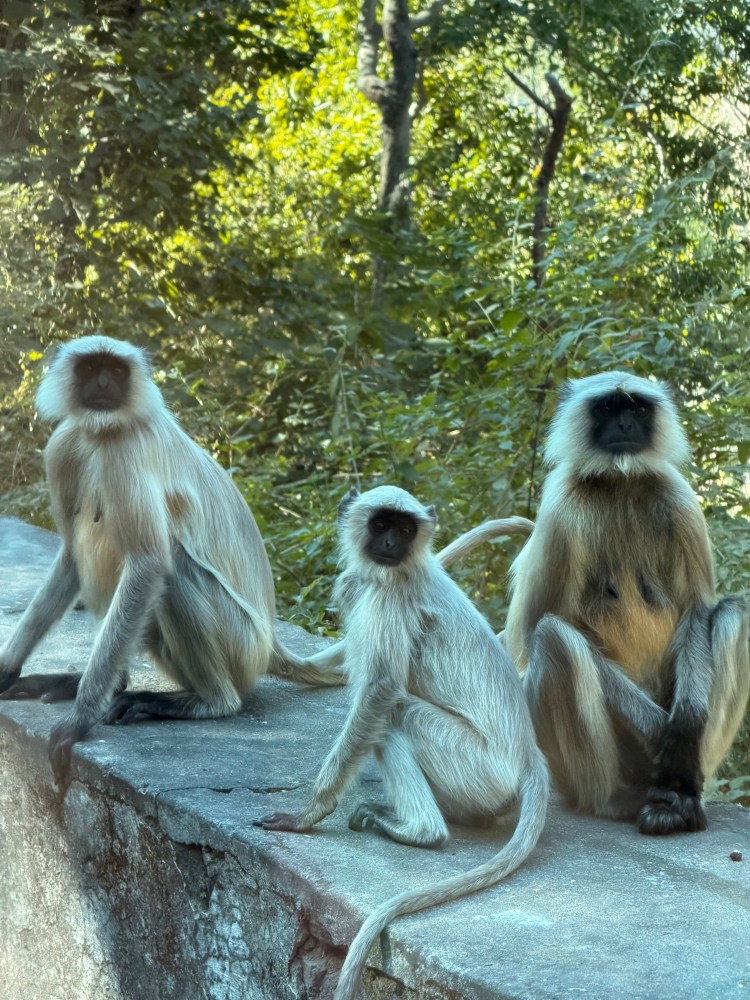
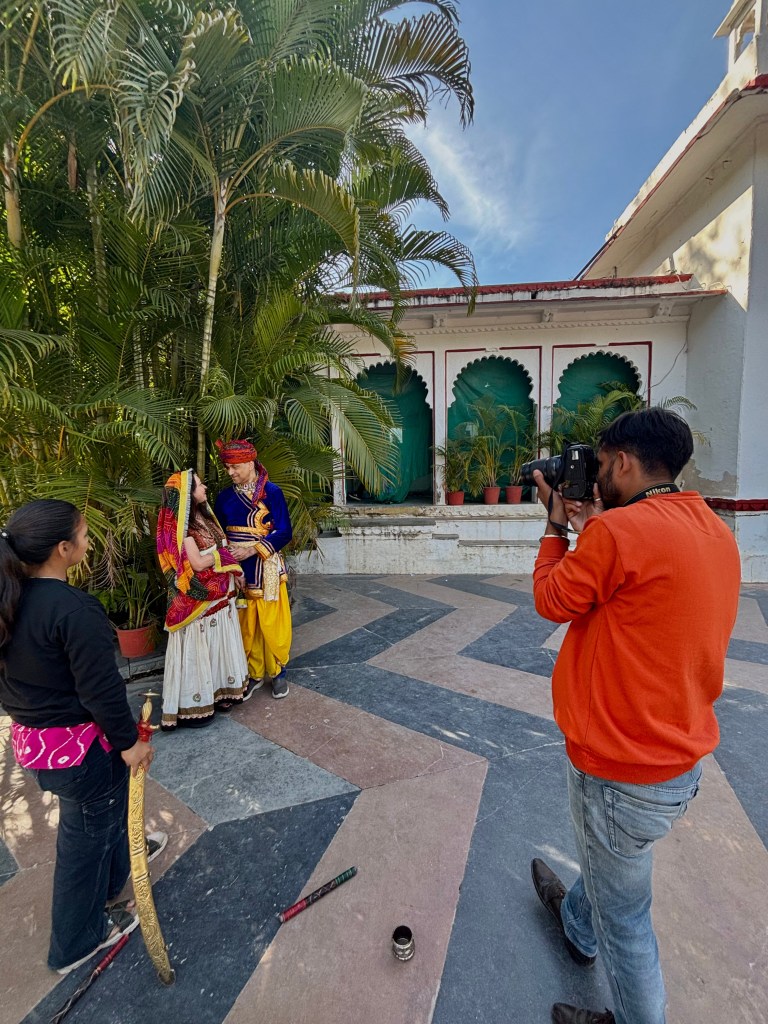
Rajasthani people, like most of India’s residents, are proud of their heritage. It jumps from the bright blue walls that line the neighborhoods of Jodhpur. The street markets are just as much a work of art as the hand-painted murals. Schoolchildren doddle down the road, cows trailing after them, leaving a line of manure to mark their path, and, even still, tourists flock for extravagant shaadi photoshoots and souvenirs of their travels. India is like that. A perfect balance of catering to the outside world while retaining the shocking, slightly off-putting parts that make it special.
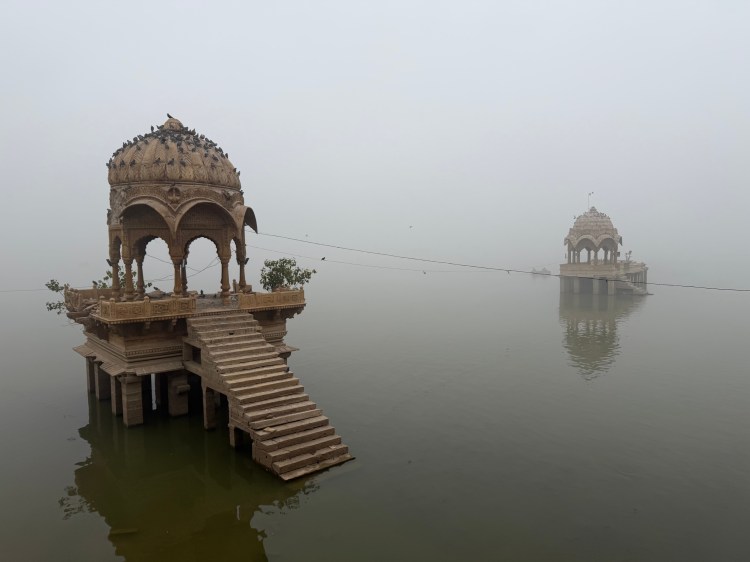
Fog covers the town like a blanket, trapping the cool air that circulates through Jaisalmer fort, making it one of the world’s few “living forts.” Inside, the day starts early and ends late. While the structure was originally built to keep out enemy troops, studded with defense mechanisms, it now functions as a self-sustaining cultural hub for those that live there. Women with veiled faces rush to and fro with pales of water while young men usher in unknowing foreigners for a lengthy sales pitch of camel-fur pashminas or typical Rajasthani carvings. It’s all in a day’s work. And while it can feel tiresome at first, the practice slowly reveals itself as the same hustle-culture that grips so many of us at home. This is their industry. It may no longer entail violent wars, but it is marked by majestic forts and opulent palaces, mixing antiquity with modernity, and making its history one that can never be forgotten.
On the opposite side of this vast subcontinent lies an entirely different landscape, one which I felt was more familiar because of its ties to my coastal hometown. In the zeitgeist of Indian culture, South India gets much less attention than the North. Yet, with time, places like Kerala have been granted their moment of glory, finally able to honor its coconut trees and rice paddy fields and Kathakali dancers. It is quiet and modest, but it does not whisper. Behind the still backwaters and sun-ripened mango trees lay enchanting stories that define how East meets West.
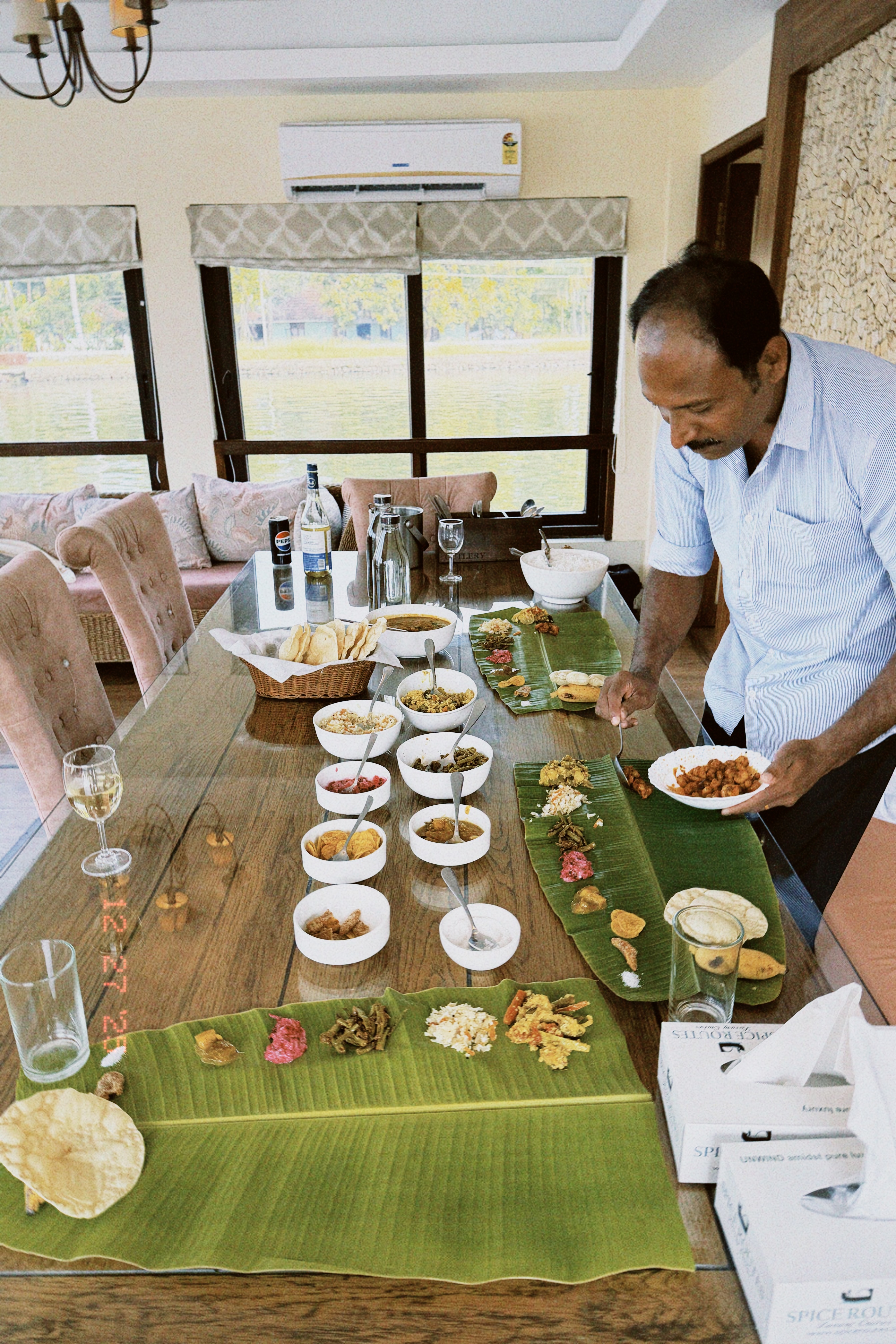
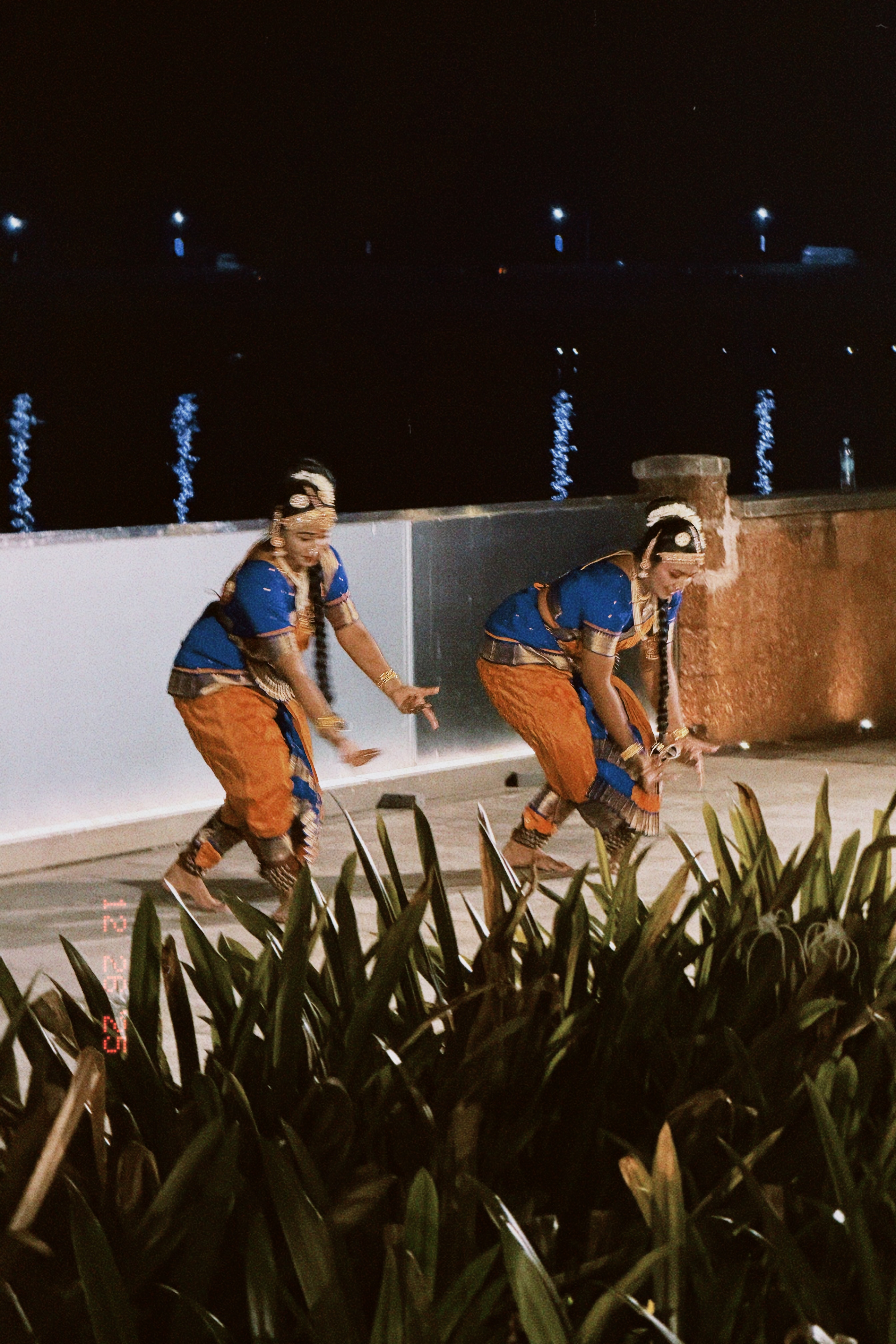
Kerala feels a bit like an untold story waiting to be read, re-read, and carefully annotated. To describe it is naturally poetic. Long banana leaves spanning the dinner table, dots of dew clinging on to impart their own unique flavor; rows of jasmine flowers in long braids of Kathak dancers, radiating their fresh scent in vast swirls as they spin around and around; burgeoning coconut and jackfruit and exotic berries hidden in plain sight, only known to local eyes. Perhaps it feels like this because it is my story. Perhaps somewhere there are traces of jasmine in my hair and an eye for berries my parents once ate as children. Perhaps.
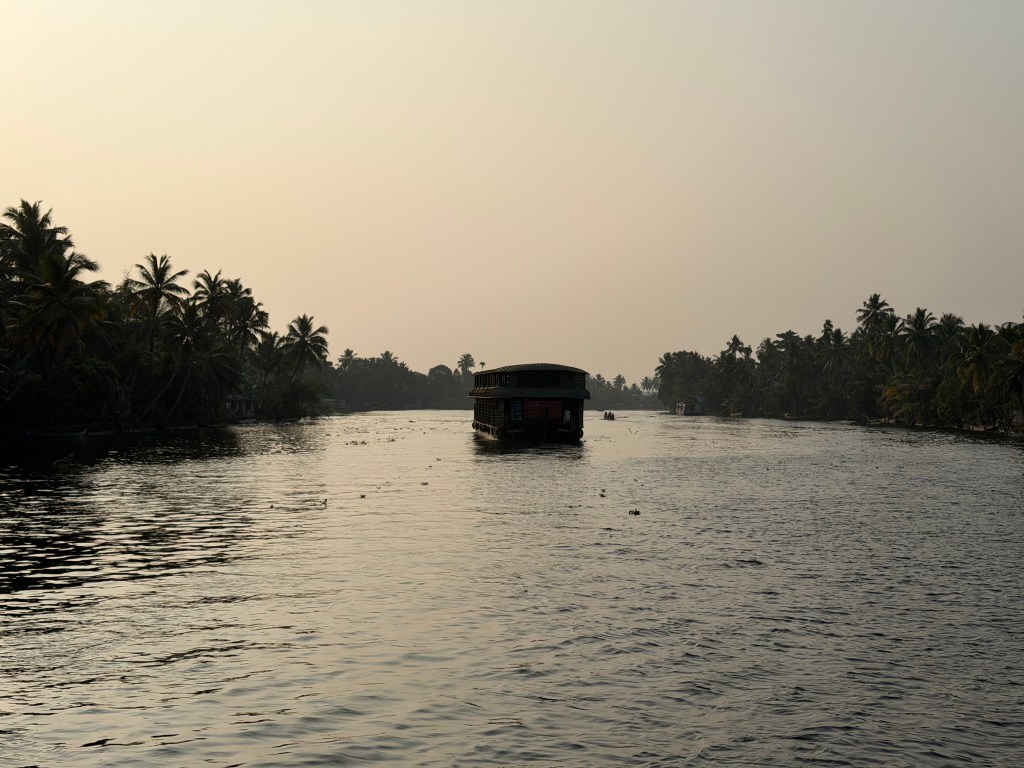
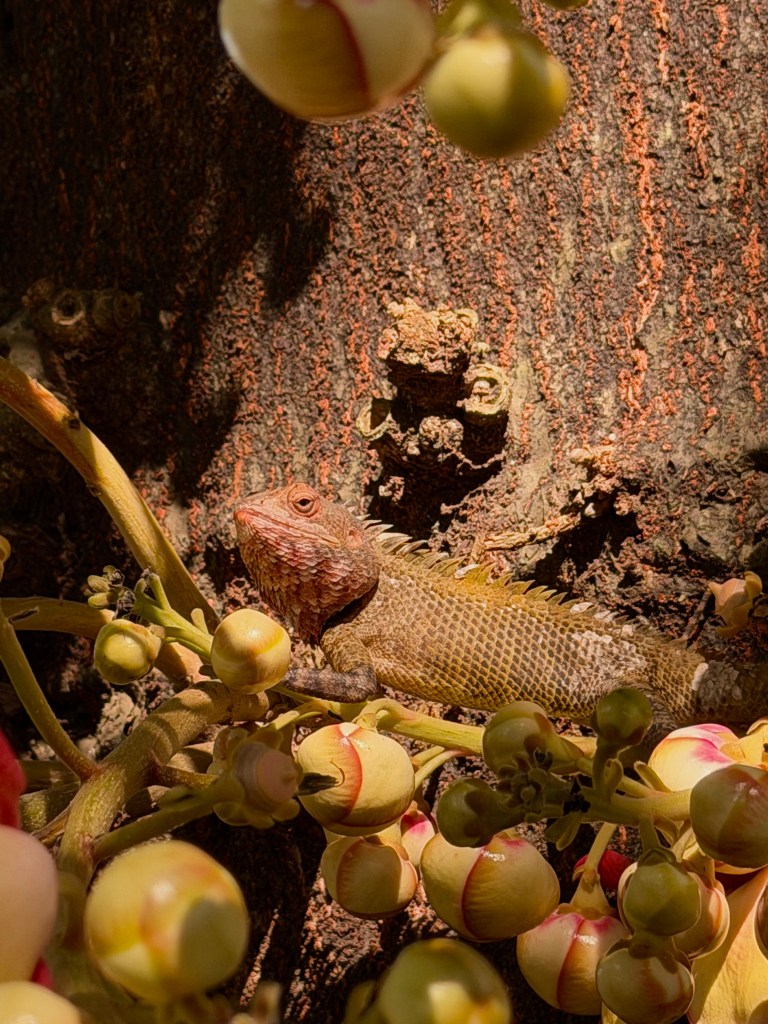
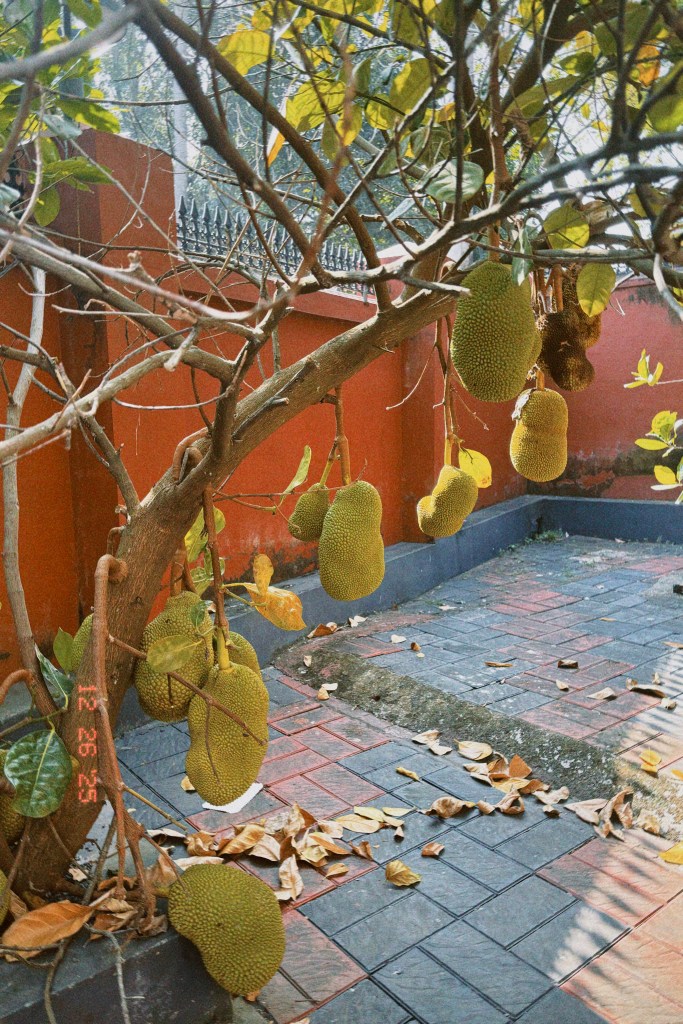
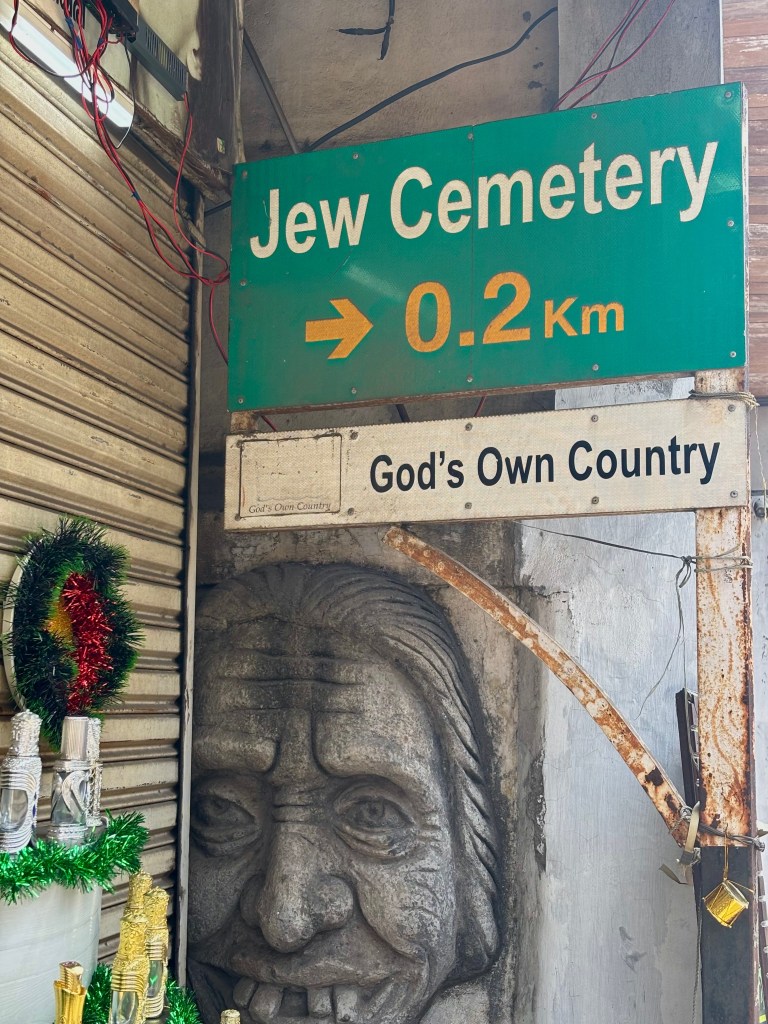

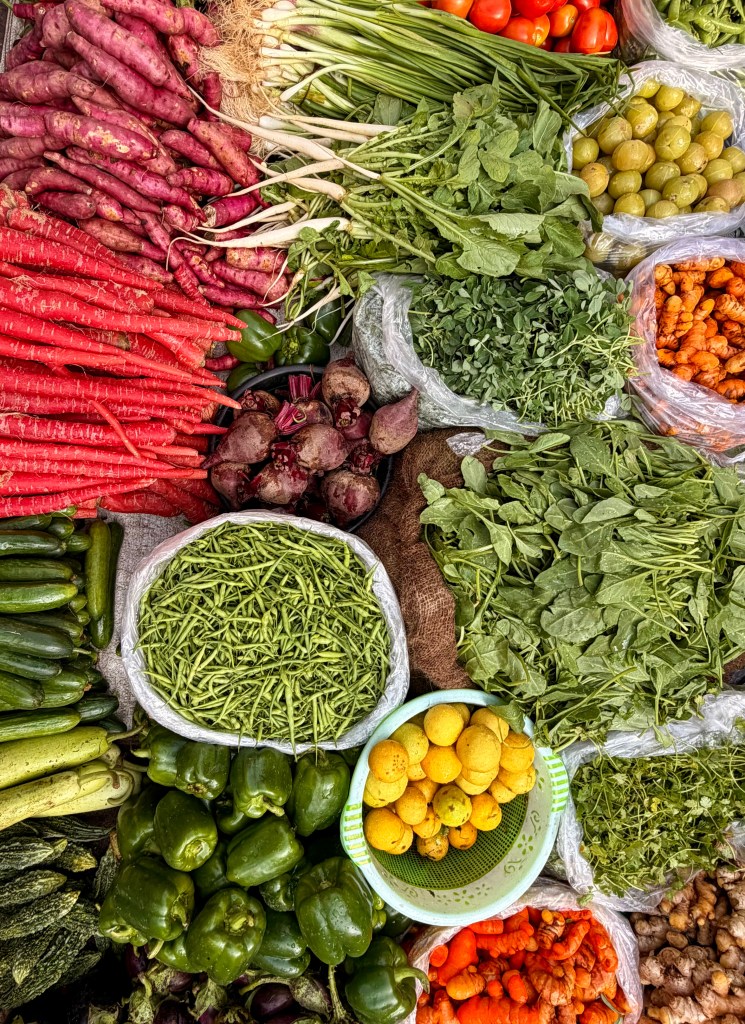
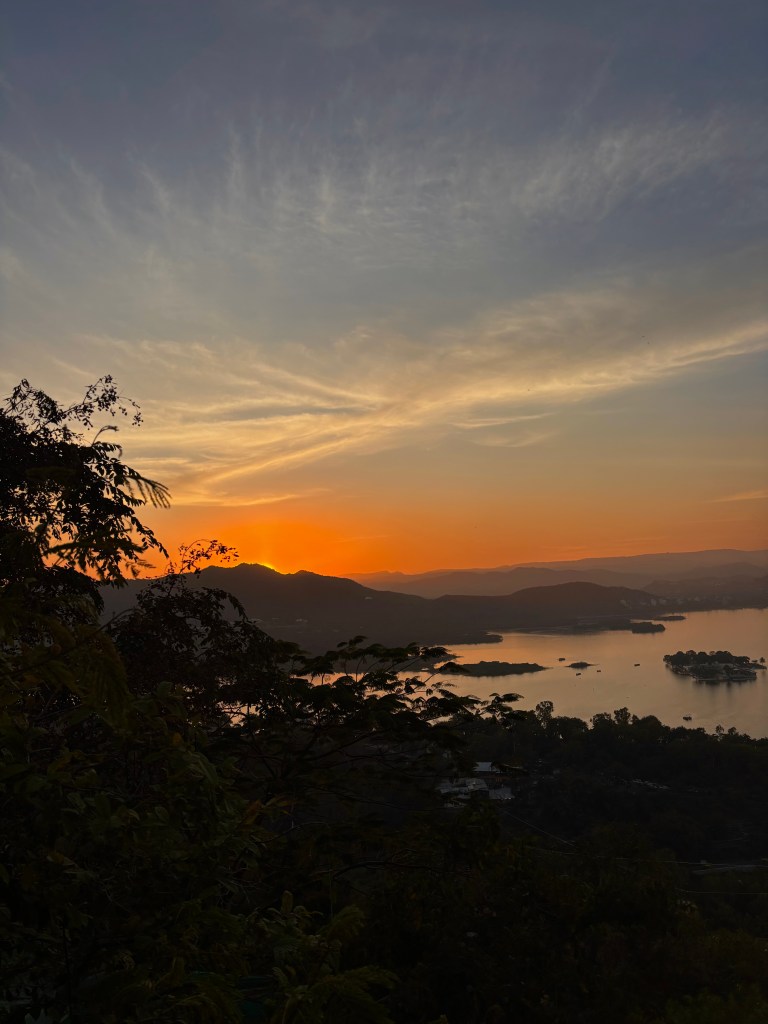
Many things, like this, are hidden in plain sight. Mostly stories — explanations of how Chinese fishing nets that once fueled Kochi’s entire economy for a year are now just an immersive gimmick for tourists; tellings of how persecuted Jews once sought refuge in the sleepy town, although now only one remains; tales of the “world’s largest” cooking pot and “world’s smallest” lime tree. Whether they scream or mumble, they make up the narrative and, as the sun sets glowing orange over the reflection of an isolated field, they make you stop and whisper to yourself — finally, I’m home.
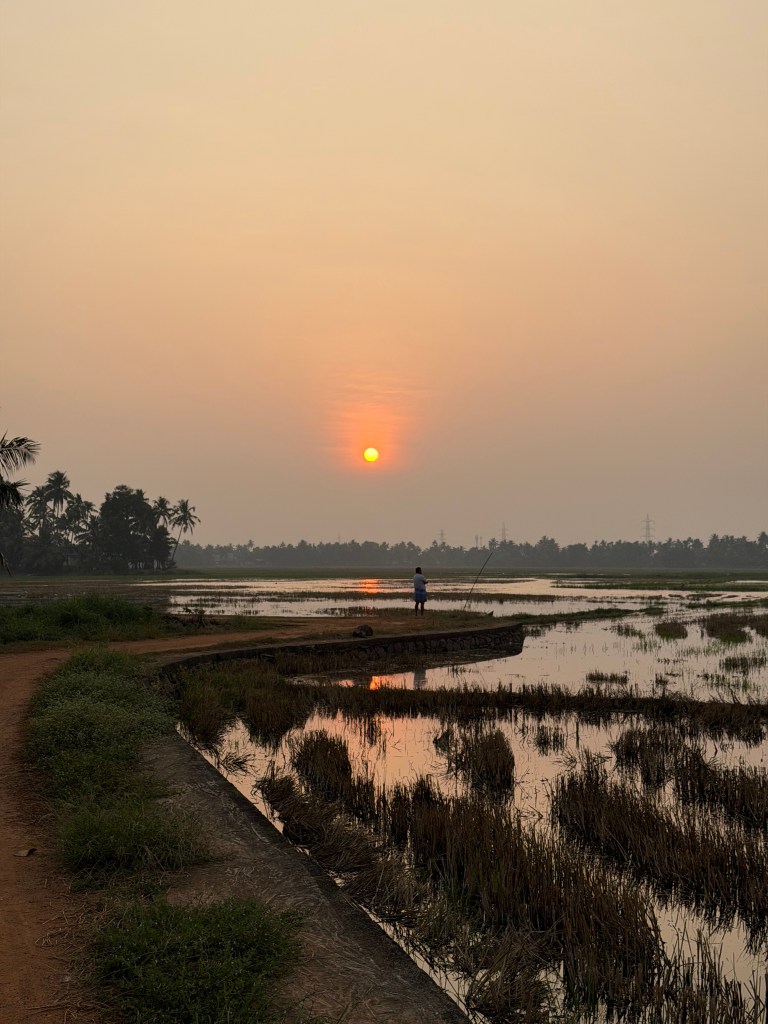
Rice kernels on arable land belong to those who have hand-picked them, one by one, to feed their families. One thing these last few weeks have reminded me is that while I am American, so too are my parents and their friends and the countless other communities of immigrants that work hard every day to be here. We all have homes and histories somewhere in the world, whether they are shouted from the rooftops of palaces or whispered under waterfalls, but they are all worthy and important. The most beautiful thing of all is to be able to recognize these stories and integrate them into a unified identity. To be an American is to accept America for each of its parts, not just the idealized version. Because without the people that labor for this country, that love this country, and that belong in this country, we can hardly call it our home.
“Little events, ordinary things, smashed and reconstituted. Suddenly, they become the bleached bones of a story.” ― Arundhati Roy, The God of Small Things
Happy Living
https://www.ilrc.org/community-resources/know-your-rights
‘We’re fighting for the soul of the country’: how Minnesota …

https://www.theguardian.com/us-news/2026/feb/01/minnesota-twin-cities-ice-protests
 chocolate and politics